On a sliding glass door, the number that matters most is stack-back: how much of the opening the treatment still covers after you've pushed it all the way open. Drapery on an extended rod gives back the most glass, panel tracks and bifold shutters give back a fair amount, and vertical blinds and bypass shutters give back the least — which is why the right answer depends on your door width, your traffic, and whether that glass is a view or just a way to the patio.
Stack-back is the number nobody quotes you, and it decides everything
Every treatment on a slider has to live somewhere when it's open. Verticals bundle into a stack at one end of the headrail. Panel tracks slide behind each other. Bifold shutters fold back against the jamb and stick into the room. Drapery gathers into a column of fabric at each side. That parked bulk is the stack-back, and on a sliding door it is the difference between a room that reads as indoor-outdoor and one that reads as a wall with a hole in it.
This matters more here than it does inland. The sliders we measure in Malibu, Pacific Palisades and Manhattan Beach are rarely a standard 6-foot two-panel unit. They're 10, 12, 16 feet wide, sometimes a multi-slide or pocketing door on a Point Dume rebuild where the whole wall disappears. Covering a door like that with something that eats two feet of glass on each side when open is a real loss, because the glass is the reason the house cost what it cost.
Rough stack-back, from the treatments we actually install:
- Vertical blinds. Roughly 12 to 18 inches of stack on a 6-foot door, and well over two feet on a 12-foot door, all bunched at one end unless you split the stack.
- Panel tracks. The panels nest behind one another, so the stack is about one panel width plus overlaps — commonly 36 to 48 inches on a wide door, and you can split it left and right.
- Bypass shutters. On a two-track bypass, the panels can only slide past each other, so you never uncover more than half the opening. That's the trade.
- Bifold shutters. Fold to 6 to 12 inches of stacked width per side, but they project into the room and need swing clearance in front of furniture.
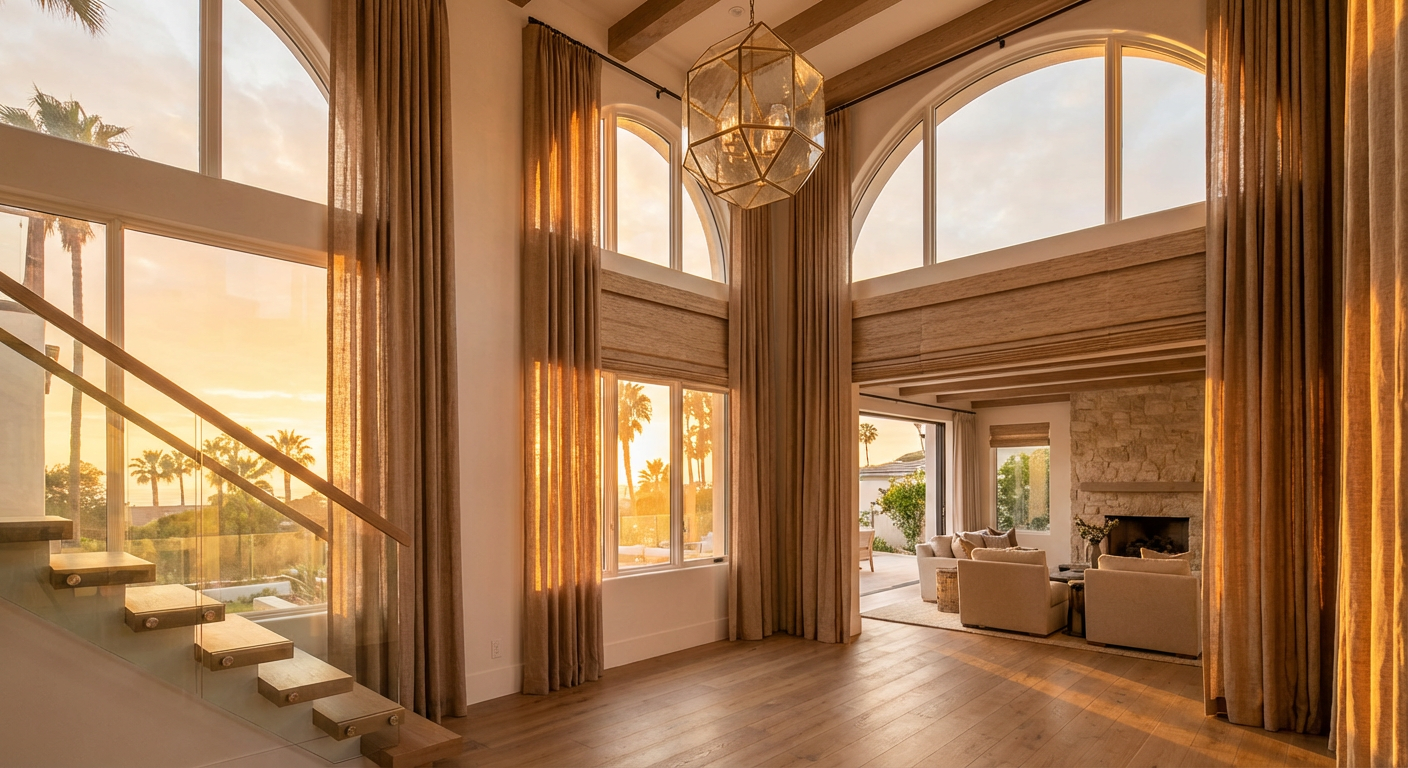
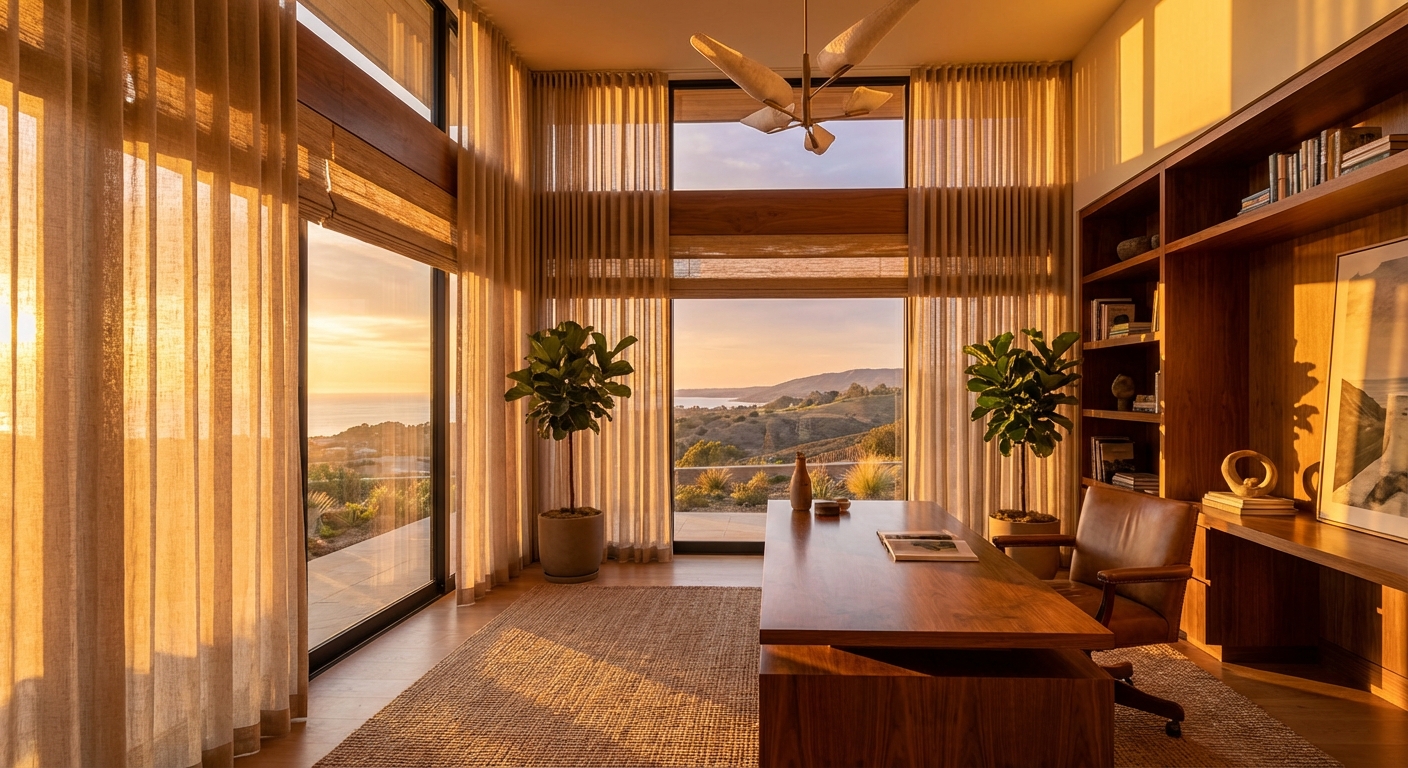
- Drapery. On a rod extended past the jamb, the stack lands on the wall, not the glass. This is the only option that can leave the door completely clear.
- Roller and solar shades. Effectively zero side stack; they roll up into a 3- to 5-inch roll above the head. But they cross the whole opening, so you raise them to walk through.
In Malibu & West Los Angeles? Get a free quote from a local installer
Send us your window sizes and a few photos and we'll quote you, usually the same day. Want us to come out with samples and measure? The consultation is free. Call or text us three days and times that work.
Serving Malibu, Pacific Palisades, Santa Monica, Brentwood, Bel Air and nearby.
How each option handles a door you actually use
Traffic is the second filter. A slider off a Brentwood Park family room that the dog and three kids use forty times a day is a different product decision than a fixed view wall in Malibu Colony that opens twice a summer.
Vertical blinds still work, and we don't sneer at them the way the industry does. They're inexpensive, they cover huge widths, and the vanes tilt for glare. The problems are real, though: vanes click and swing in the ocean breeze the moment you crack the door, bottom chains tangle, and vinyl vanes in strong west sun eventually curl. If you hate yours, it's usually the sound and the cheap look rather than the concept.
Panel tracks are the direct upgrade. Flat fabric panels, 18 to 36 inches wide, on a two- to five-channel track. You get the same sliding operation without the rattle, and you can spec the panels in solar screen fabric so the door still reads as a view when they're closed. On a wide Santa Monica Canyon slider with a lot of traffic, this is often the most livable choice.
Bypass and bifold shutters deliver the look and the resale value people want, plus louvers that tilt for low-angle glare. Bypass is quieter and takes no room depth, but half the glass stays covered. Bifold gives you more open door and a more finished look, but the folded panels need somewhere to go and they need a track at the floor or a heavy-duty header. Measure your handle clearance before you fall in love with either — a projecting slider handle can force an outside mount or a deeper buildout.
Drapery is the quietest, softest option and the only one that fully clears the glass. It's also the one with the most daily fuss on a high-traffic door, and pets find the leading edge. It shines on view walls where the panels mostly live open and frame the water.
Roller and solar shades on a slider are the right call when the problem is heat and UV rather than privacy. A 3 to 5 percent openness solar screen left down all afternoon cuts glare and fading and still shows you the horizon. Top-down/bottom-up hardware lets you drop the shade from the top to block the low sun while leaving the lower half of the door clear to walk through — a genuinely underused trick on Westside doors. We wrote more about the heat side of this in our piece on west-facing ocean-view rooms.
Salt air, UV, and the hardware that quietly fails first
Within a few blocks of the water — The Strand, Marina del Rey, the Palos Verdes Estates bluff — the failure point on a slider treatment is almost never the fabric. It's the metal. Plated steel screws in a headrail will bleed rust down a white panel inside two years. Unfinished aluminum tracks pit. Cheap carriers in a vertical headrail bind up once salt and grit get into them, and the door treatment nobody can open smoothly is the one that gets left closed.
What to ask about: stainless or coated fasteners, powder-coated or anodized tracks, and sealed carriers on panel tracks. On shutters, painted hardwood in a beachfront room is a maintenance commitment; an engineered composite or a hardwood with a factory-cured finish handles humidity swings better. UV is the other coastal constant — vinyl vanes and unlined cotton drapery both fade and distort on unobstructed west glass, so fabric selection on a slider is a durability decision, not just a color one.
Motorization earns its cost on tall stacked glass, on doors behind a sofa or a dining table, and anywhere with a transom you can't reach. Budget $200 to $500 per shade added to the base price, and on coastal installs specify a rechargeable or hardwired motor over an exposed-battery tube.
Picking by situation, not by product
- Ocean-facing view wall you rarely open. Solar shades for the afternoon, drapery for softness and evening privacy. Both stack off the glass.
- Everyday patio or pool slider with kids and dogs. Panel tracks. Wipeable, no dangling chains, and the stack splits to the sides.
- Street-side or neighbor-facing slider on a tight Venice or Beverly Hills lot. Bypass or bifold shutters. Louver tilt buys you privacy and light at the same time, and they match the shutters on the rest of the house.
- Hillside lot with HOA sightline rules. Check the required exterior appearance first. Shutters and a white-backed roller both read neutral from outside; colored drapery linings often don't.
- Rental, guest house, or a door you plan to replace. Keep the verticals or replace them like for like, and put the money into the rooms you look at.
What this costs, and how to get a real number
Sliders are billed by the opening, so a 12-foot door is not one window's worth of anything. Shutters run $55 to $106 per square foot installed, which on a wide door is the largest line item on most quotes. Roller and solar shades run $495 to $955 per typical window, with a wide slider priced above that on square footage. Drapery runs $800 to $2,500 per window depending on fullness, lining and hardware. Panel tracks and vertical blinds price by track length and fabric, so we quote those at the measure rather than guess.
If you already have a bid in hand for a slider, run it through our free Quote Check — door treatments are where line items like tracks, extension brackets and handle clearance quietly disappear from a proposal. And when you're ready for real numbers, book an in-home measure: someone comes out, measures every window in the house, brings actual shutter and fabric samples to hold up against your glass, and leaves you with a firm quote. The in-home consultation is free. Install is included in the price, and our install warranty runs 12 months.
Frequently asked questions
What is stack-back on a sliding glass door treatment?
Stack-back is how much of the door opening the treatment still covers when it's fully open. Vertical blinds stack 12 to 18 inches on a 6-foot door and more than two feet on a 12-foot door. Panel tracks stack about one panel width plus overlaps. Drapery on a rod extended past the jamb can park entirely on the wall and leave the glass clear.
Can you put plantation shutters on a sliding glass door?
Yes, in two configurations. Bypass shutters slide on a track, so they never uncover more than half the opening. Bifold shutters fold back against each side and give you more clear glass, but the folded panels project into the room and need swing clearance. Check your slider handle projection first, since it often forces an outside mount or a deeper frame.
What is the best alternative to vertical blinds on a wide slider?
Panel tracks are the closest direct replacement. They slide the same way, cover wide openings, and use flat fabric panels instead of vanes, so there's no clicking, no bottom chain and no curling vinyl. Spec the panels in a solar screen fabric and the door still reads as a view when they're closed.
How do you block afternoon glare on a slider without blocking the door?
A solar shade with top-down/bottom-up hardware lets you drop the shade from the top to intercept low western sun while leaving the lower half of the door clear to walk through. A 3 to 5 percent openness screen cuts glare and UV while keeping the horizon visible.
Does salt air near the beach affect sliding door hardware?
Yes. Within a few blocks of the water, plated steel fasteners rust and stain the panels, unfinished aluminum tracks pit, and unsealed carriers bind up with salt and grit. Ask for stainless or coated fasteners, powder-coated or anodized tracks, and sealed carriers on panel tracks.
In Malibu & West Los Angeles? Get a free quote from a local installer
Serving Malibu, Pacific Palisades, Santa Monica, Brentwood, Bel Air and nearby.
- Quote from your window sizes and photos, usually the same day
- See real samples in your space
- We carry every major manufacturer