Replace anything with a loose or looped cord that a standing or climbing child can reach, and start with the rooms where kids sleep and play unsupervised. The rest of the house can move at the pace of your budget, as long as you deal with the cords in the meantime — cut, cleated, or tensioned to the wall.
Why the cords are the problem, not the blinds
A lot of the houses we measure on the Westside come with window coverings that were installed by somebody else, years ago, for somebody else's life. Rebuilds in Pacific Palisades and Santa Monica Canyon, older ranch houses in Brentwood Park, condos above the sand in Marina del Rey and Manhattan Beach, guest houses in Malibu and Topanga that nobody re-covered after the main house was done. Then a baby arrives, or the grandkids start visiting, and someone looks up at the dusty vertical blinds on the slider and asks the obvious question.
The hazard is specific. It is not the slats or the fabric. It is a cord that forms a loop, or that can form a loop, at a height a small child can reach. That includes the classic pull cord on an old horizontal blind, the continuous chain loop on a roller or vertical, and — the one people miss — the inner lift cords that run through the back of a Roman shade or through the ladder of a wood blind. A child does not have to be tall. Cribs, changing tables, toy chests, a bed pushed against a window wall, the built-in window seat in a Trousdale Estates bedroom: all of them are climbable, and all of them put a cord in reach.
The industry did change. The safety standard that governs corded window coverings now pushes ready-made, off-the-shelf products sold at retail to be cordless or to have cords that are simply not accessible. Custom-made products, which is what we do, operate under tighter rules too — limits on how long an accessible cord can be and how it has to be secured or contained. That means a new custom order today looks nothing like the blind hanging in your 1990s guest room. It also means the risk in most houses sits in the old stuff nobody has touched, not in what is currently being manufactured.
In Malibu & West Los Angeles? Get a free quote from a local installer
Send us your window sizes and a few photos and we'll quote you, usually the same day. Want us to come out with samples and measure? The consultation is free. Call or text us three days and times that work.
Serving Malibu, Pacific Palisades, Santa Monica, Brentwood, Bel Air and nearby.
How to walk the house in fifteen minutes
Do this once, room by room, with a phone in hand to take photos as you go. You will want them later for quoting anyway.
- Look for any hanging cord or chain. Stand in the doorway. If you can see a cord dangling, so can a toddler.
- Pull the shade down and check the back. Roman shades and woven woods often have internal lift cords running down rings on the reverse side. From the front they look clean. From behind the sofa they are a loop.
- Check what is under the window. A cord that ends six feet off the floor is not out of reach if there is a dresser, a crib rail, or a bench below it.
- Check the guest rooms and the rooms you never use. These are usually the oldest coverings in the house and the ones kids find first.
- Check the continuous chain loops. Roller and vertical blinds driven by a bead chain need a tensioner screwed into the wall or window frame so the loop cannot be pulled away from the surface. Loose tensioners hanging in mid-air are common and they defeat the point.
Priority order, in our experience: nursery and kids' bedrooms first, then playroom and family room, then any guest room where a child naps, then the rest. Hallways and high clerestory glass in a two-story Bel Air entry are usually last, because nothing reaches them.
If you cannot replace everything at once, the interim fixes are real and take an afternoon: cut the cords off a blind you plan to leave down anyway, install cord cleats high on the wall and wrap every cord, anchor loose chain tensioners, and move the crib and the dresser off the window wall entirely.
The four ways to get rid of cords, and what each one is good at
Cordless lift. A spring mechanism in the headrail. You push the bottom rail up or pull it down by hand and it stays. This is the standard answer for cellular, pleated, roller and most blinds at reachable heights. The honest limits: springs need periodic adjustment over a long life, very wide or very heavy shades get awkward to lift evenly with one hand, and blackout cellulars in a nursery need to be measured carefully because side light gaps are the thing parents actually complain about, not the cord.
Wand control. A rigid wand you tilt or slide. Rigid means no loop. Good on verticals across a slider and on blinds where you mostly want tilt rather than lift. It is also the quiet upgrade on old vertical blinds in Venice and Santa Monica condos, where the chain-and-cord version is still everywhere.
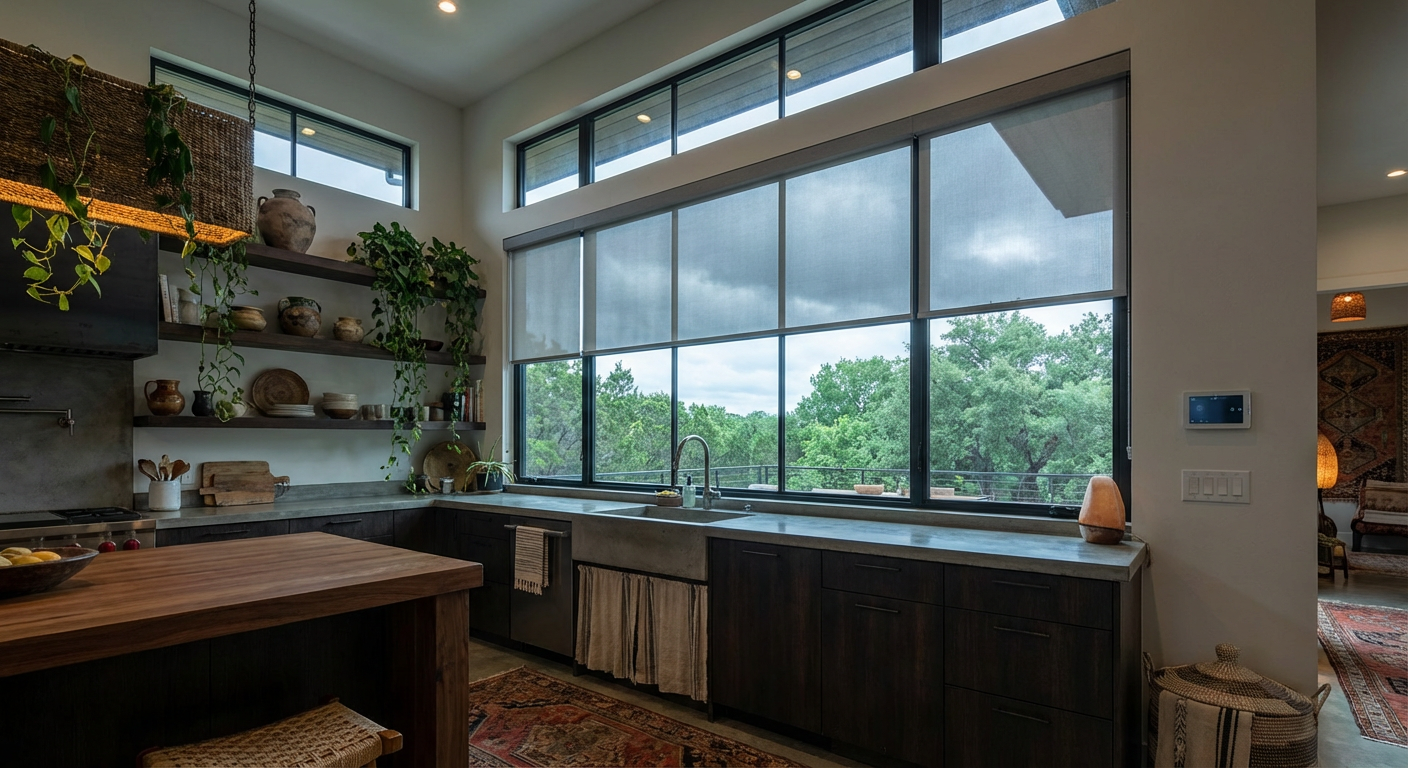
Motorization. No cord at all, a remote or an app, and the only real option for the tall ocean-facing glass this region is full of. On a Point Dume view wall or a stair-landing window in Palos Verdes Estates, a cordless spring lift is not usable anyway — you cannot reach the bottom rail. Motors also let you schedule shades to drop during peak afternoon sun, which matters more here than people expect; we went into that in cooling a west-facing ocean-view room. Near the water, ask what the hardware is made of. Salt air is hard on cheap brackets, chains and exposed fasteners, and corrosion is the reason a lot of coastal shades fail early — a theme in the complaints we read across the industry.
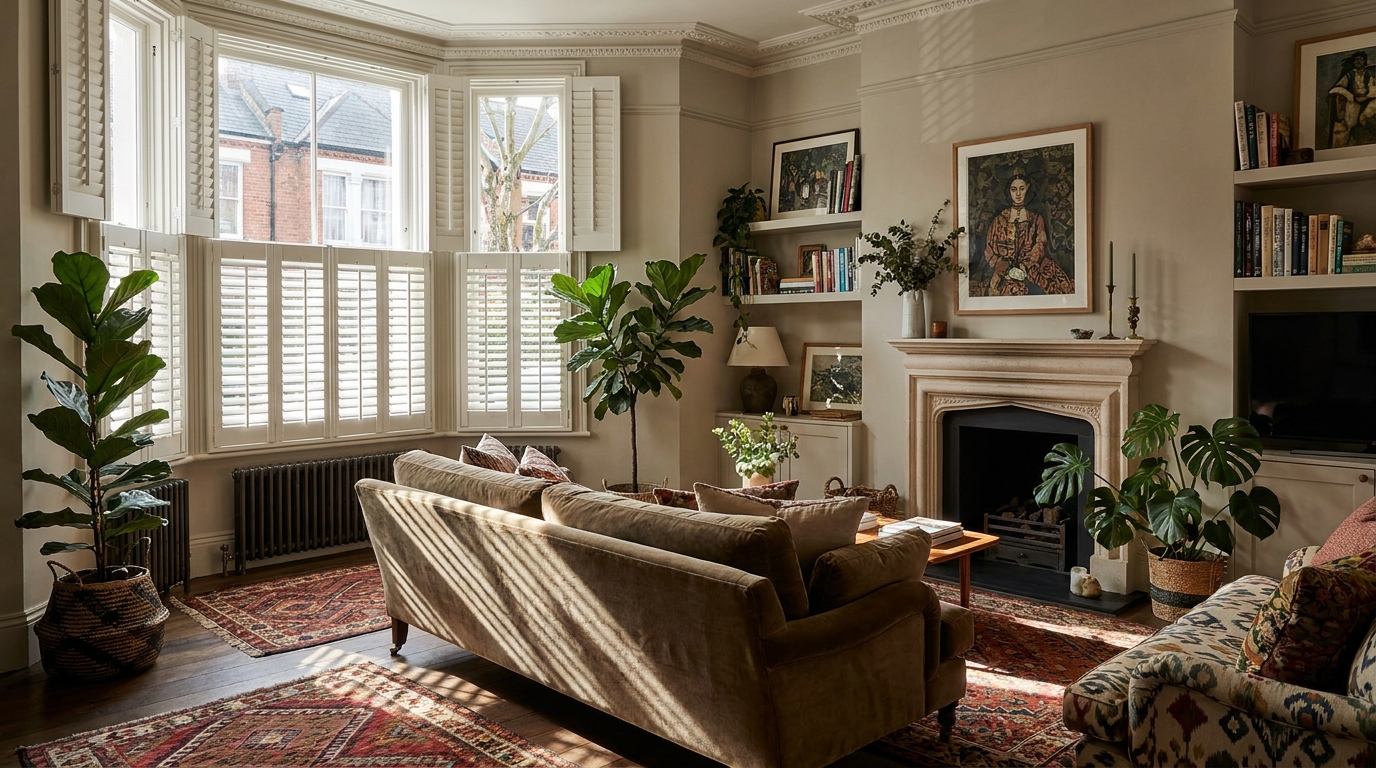
Shutters. A plantation shutter has no cords, no chains and no motor. You tilt the louvers with your hand or a hidden tilt rod and open the panels on hinges. For a kid's room that gets rough use, this is the most durable thing you can hang, and it is the reason shutters keep showing up in family houses in Brentwood and Beverly Hills. The tradeoff is that shutters do not stack out of the way like a shade, and they are the most expensive option per opening on small windows because of minimum billing.
What it costs, and where the money is best spent first
How each option is priced, so you can plan a phased replacement rather than a single painful number:
- Cordless roller, solar, zebra and cellular shades: per window.
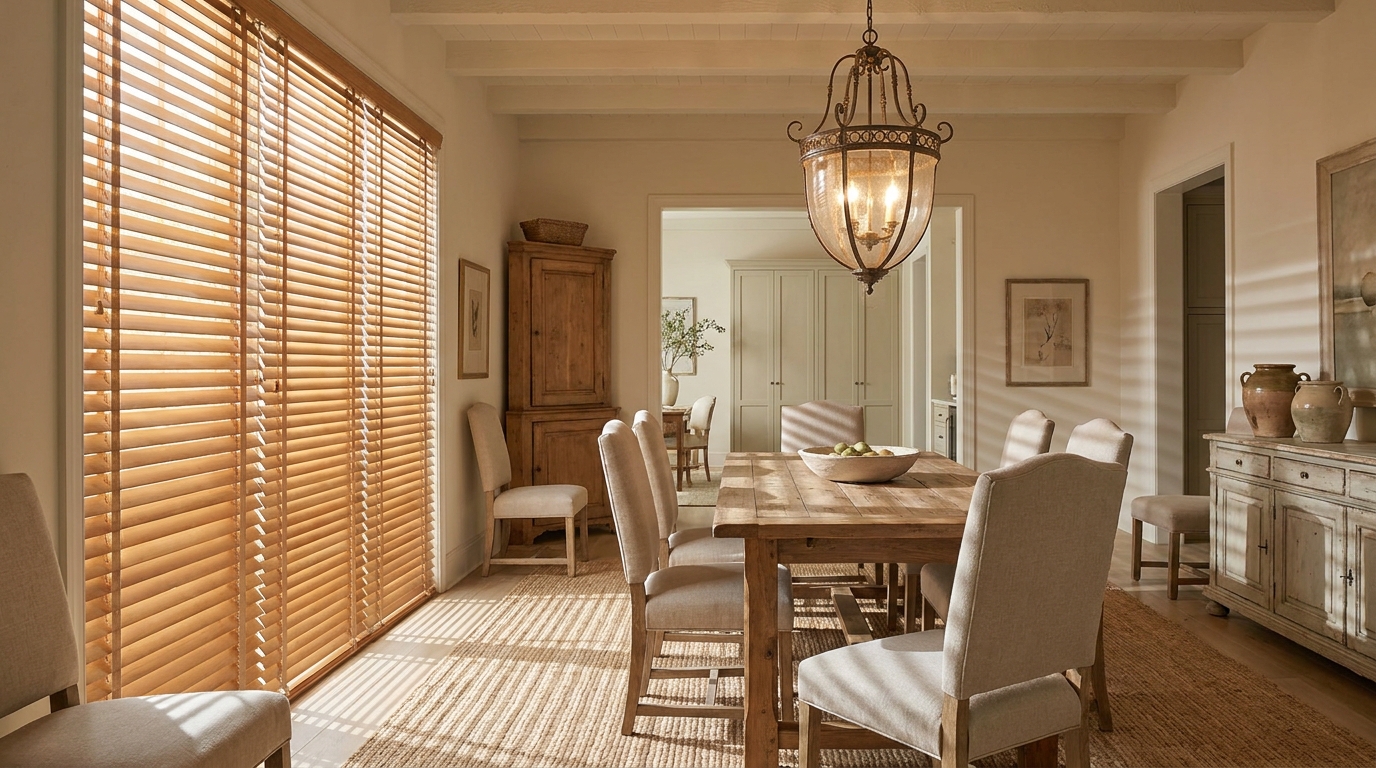
- Wood and faux wood blinds with cordless lift or wand: per window.
- Roman and woven wood shades, cordless: per window.
- Plantation shutters: per square foot, with 12 square feet billed as a minimum per opening — which is why a small bathroom window costs more than the math suggests.
- Motorization: added per shade.
Every home is different, so we give a free written quote from your window sizes or photos. Request yours here. Install is included in what we quote. If you are phasing, spend on the nursery and kids' rooms properly — blackout cellular or a lined roller with a good side channel or a generous overlap — and do the cheap cordless faux wood in the guest room later.
Cordless also just looks better. Once the cords are gone, the window reads as a clean horizontal line instead of a rail with two strings hanging off one side, and on a wall of glass facing the water that difference is obvious.
Getting a real number for your house
When you're ready, book a visit. Someone comes to the house, measures every window, brings real samples so you can work the cordless lift and the wand with your own hands, and you get a firm quote before anyone leaves. The in-home consultation is free. If you would rather not have anyone over yet, send sizes and photos for a remote quote — and if you already have a bid from somebody else, run it through Quote Check and we'll tell you what the line items mean.
Frequently asked questions
Are all new window treatments cordless now?
Not all, but the direction is clear. The industry safety standard pushes ready-made products sold off the shelf to be cordless or to have cords that are not accessible, and custom products face tighter limits on how long an accessible cord can be and how it must be secured. Most of the risk in a typical house is in older coverings that were installed years ago, not in what is being made today.
Which rooms should we do first if we can't replace everything at once?
Nursery and kids' bedrooms first, then the playroom and family room, then any guest room where a child naps. High windows nobody can reach are last. In the meantime, cut cords on blinds you are leaving down, install cord cleats high on the wall, and anchor any loose chain tensioners to the frame.
Is a cordless shade or a shutter safer for a kid's room?
Both remove the cord. A shutter has no lift mechanism at all and takes rough handling better, which is why it holds up well in kids' rooms. A cordless cellular or roller stacks out of the way and does blackout better for naps. Many families use shutters through the house and a blackout cordless shade in the nursery.
Do Roman shades have hidden cords?
Older ones usually do. Lift cords run through rings on the back of the fabric and can form a loop even when the front looks clean. Pull the shade down and look behind it. When you replace them, choose cordless or motorized lift: cordless or inaccessible cords are the safest choice.
Does motorized hardware hold up near the ocean?
It can, but the components matter. Salt air corrodes cheap brackets, fasteners and exposed chain, and coastal homes in Malibu, Manhattan Beach and Marina del Rey see failures that inland homes don't. Ask what the brackets and hardware are made of, and keep motors and batteries out of direct spray and constant open-window exposure.
In Malibu & West Los Angeles? Get a free quote from a local installer
Serving Malibu, Pacific Palisades, Santa Monica, Brentwood, Bel Air and nearby.
- Quote from your window sizes and photos, usually the same day
- See real samples in your space
- We carry every major manufacturer